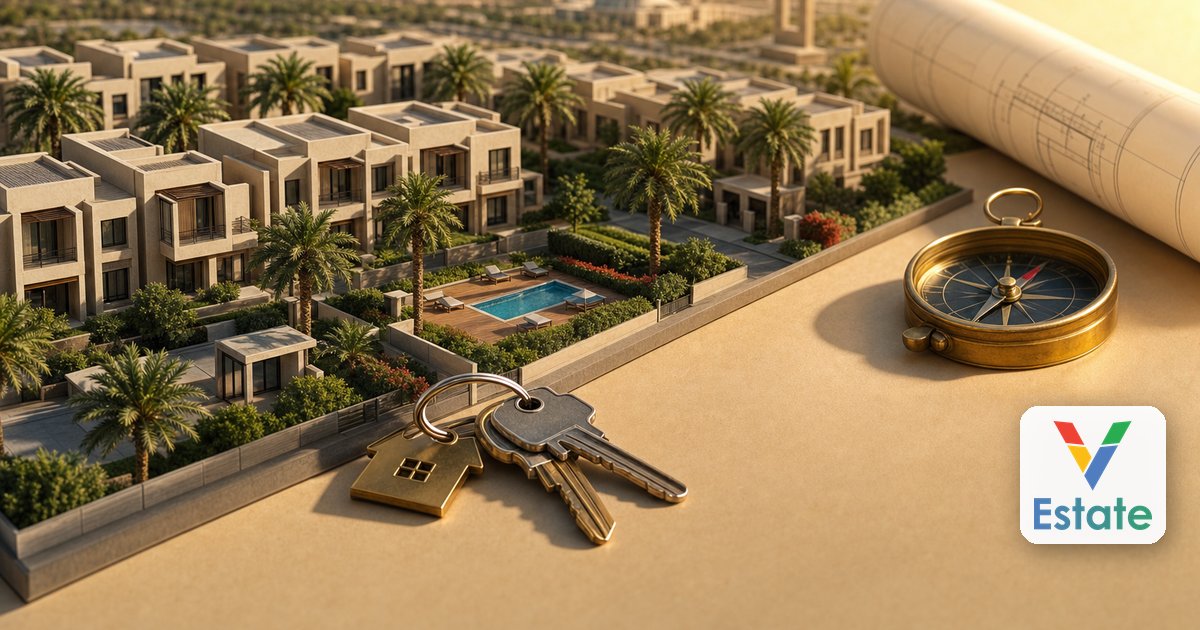
New Cairo and the New Administrative Capital are where a large share of Egypt's residential demand has moved: master-planned compounds, new business districts, and a steady stream of off-plan launches. It's also where first-time buyers make the most expensive mistakes. This guide walks through what actually matters in 2026, whether you're buying a home or an investment.
Off-plan vs. ready: the first decision
Almost every buyer faces this fork.
Off-plan (buying before or during construction):
- Lower price per meter and long, developer-financed payment plans.
- Potential capital appreciation between purchase and delivery.
- The risk: delivery delays and dependence on the developer actually finishing to spec.
Ready or resale (finished units):
- You inspect exactly what you're buying, with no surprises on finishing or view.
- Immediate use: move in, or rent it out and start earning.
- The trade-off: higher price and usually a larger cash down payment.
There's no universally "right" answer. It depends on your timeline, your appetite for risk, and whether you need to live in it now or can wait for delivery.
Understanding payment plans
The headline price is not the number that matters most. The schedule is. In New Cairo and the New Capital, it's common to see:
- Down payments around 5% to 15%.
- Installment periods of 6 to 10 years.
- Occasionally 0% interest over the plan.
Two units with the same sticker price can have very different real costs once you account for the down payment, the length of the plan, and any delivery-linked payments. Always compare total price and cash flow.
Due diligence on the developer
With off-plan especially, you are buying a promise. Verify it:
- Track record: has the developer delivered previous phases on time and to the promised quality? Visit their finished projects if you can.
- Licensing & land: confirm the project is properly licensed and the land is owned/allocated correctly.
- The contract: read the delivery date, the penalty clause for delays, and the exact specifications. What isn't written down doesn't exist.
The costs buyers forget
Budget beyond the unit price:
- Maintenance deposit and annual maintenance.
- Clubhouse / membership fees in gated compounds.
- Registration and legal fees.
- Finishing / fit-out for core-and-shell or semi-finished units. This can be a large line item.
- For investors: the time and cost of finding tenants and periods of vacancy.
A note for investors
If you're buying to rent or resell, run the numbers like an operator, not a dreamer: estimated rental yield, realistic occupancy, service charges, and your exit horizon. Location, developer reputation, and unit type drive both rentability and resale. A well-located, sensibly-sized unit from a trusted developer beats a cheap gamble almost every time.
How this connects to brokers and developers
If you're on the selling side of these transactions, as a broker or a developer's sales team, the buyer's journey above is exactly what your CRM should manage: capturing the inquiry, qualifying budget and area, presenting matching inventory, and following up until the contract is signed. That's what V Estate is built to do, with WhatsApp, an Arabic AI assistant, and automated follow-up. See our guide on real estate marketing in Egypt for the playbook.
This article is general information, not legal or financial advice. Always verify project details, contracts, and licensing independently before committing to a purchase.