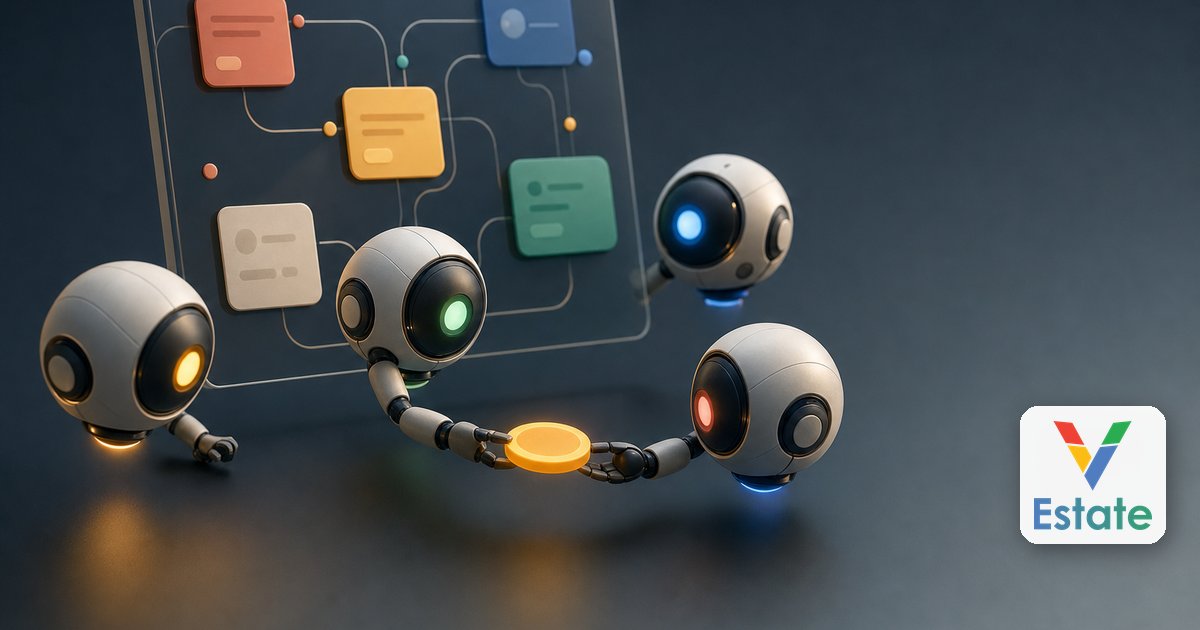
The year 2026 marks a pivotal shift in artificial intelligence: AI is no longer just a tool we use. It's becoming a teammate we collaborate with. AI agents are emerging as one of the most transformative technologies of our time, capable of planning tasks, making decisions, and executing actions autonomously.
From Tools to Teammates: The AI Agent Revolution
Traditional AI systems required constant human guidance, responding to specific prompts and queries. AI agents, however, represent a fundamental leap forward. These systems can:
- Plan multi-step tasks without constant supervision
- Make contextual decisions based on changing circumstances
- Execute complex workflows across multiple systems
- Learn from outcomes and adjust their approaches
- Collaborate with humans as active participants rather than passive tools
Real-World Applications Transforming Industries
Customer Service & Support
AI agents are revolutionizing customer support by handling complex inquiries that previously required human intervention. They can:
- Investigate issues across multiple systems
- Make decisions about refunds or escalations
- Schedule follow-ups automatically
- Learn from each interaction to improve responses
Software Development
Development teams are deploying AI agents that:
- Review pull requests and suggest improvements
- Identify and fix bugs automatically
- Generate test cases based on code changes
- Manage deployment pipelines
Business Operations
Companies are using AI agents to:
- Automate procurement processes
- Manage inventory based on predictive analytics
- Coordinate complex project workflows
- Handle routine administrative tasks
The Caution: Not Ready for Prime-Time Yet
Despite the hype, experts warn that AI agents aren't universally ready for critical business processes. Current limitations include:
- Error rates that are still too high for high-stakes financial decisions
- Unpredictable behavior in edge cases
- Difficulty with complex multi-system integrations
- Challenges in explaining their decision-making process
Leading organizations are taking a measured approach: deploying agents in low-risk scenarios first, gradually expanding their responsibilities as the technology matures.
Building Responsible AI Agent Systems
Governance First
Organizations implementing AI agents must establish:
- Clear boundaries for agent decision-making authority
- Human oversight for high-stakes actions
- Audit trails for all autonomous actions
- Rollback procedures when agents make mistakes
Progressive Deployment
The most successful implementations follow a staged approach:
- Observation phase: Let agents suggest actions without executing
- Assisted execution: Agents act with human approval
- Autonomous operation: Agents operate independently in defined scenarios
- Continuous monitoring: Track performance and adjust boundaries
The Future: Multiagent Collaboration
The next frontier is systems where multiple AI agents collaborate:
- Specialized agents each handling specific domains
- Agent orchestration coordinating complex workflows
- Emergent problem-solving through agent collaboration
- Adaptive teams that reconfigure based on task requirements
What This Means for Your Business
AI agents represent both an opportunity and a challenge. Organizations that start experimenting now (with proper governance) will be positioned to:
- Reduce operational costs through intelligent automation
- Scale operations without proportional headcount growth
- Improve consistency in routine decision-making
- Free human talent for creative and strategic work
At Vilartech, we're helping businesses navigate this transition. Our SaaS platforms are being designed with AI agent integration in mind, allowing your teams to leverage autonomous systems safely and effectively.
Getting Started with AI Agents
If you're considering AI agents for your organization:
- Identify low-risk use cases where mistakes have minimal consequences
- Establish governance frameworks before deployment
- Start with observation before giving agents execution authority
- Measure everything to understand agent performance
- Plan for human oversight indefinitely
The AI agent revolution is here, but success requires thoughtful implementation. The companies that balance innovation with caution will reap the greatest rewards.
Want to explore how AI agents can transform your business operations? Contact Vilartech to discuss intelligent automation strategies tailored to your needs.